


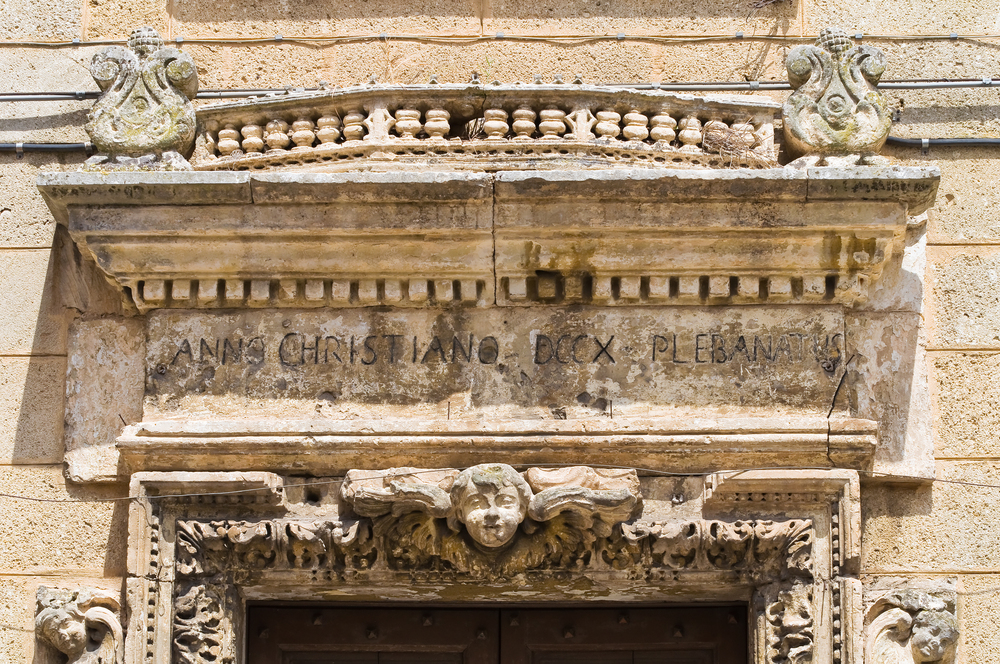
In the heart of Salento lies a geographical and cultural area that surprises those who encounter it for the first time: Grecia Salentina, a group of municipalities where an ancient language—Griko—still survives today, a language whose roots lie in the Greek presence in this corner of Italy. It is not merely a folkloric curiosity found on postcards: it is a living linguistic community, protected by the Italian government as a historical minority, with its own oral literature, music, and a sense of identity that its inhabitants proudly cherish.
What is Griko and where does it come from?
Griko is a linguistic variety of Greek origin spoken in some towns in southern Salento. The debate among scholars about how it came to be here is still ongoing: some argue for a direct continuity dating back to the colonization of Magna Graecia, while others hypothesize a later influence linked to the Byzantine Empire, which ruled this part of southern Italy for centuries. The reality is likely more complex: successive waves of Greek presence have accumulated over time, leaving traces in the language, place names, religious traditions, and poetic repertoire.
What is certain is that Griko is neither Modern Greek nor pure Ancient Greek: it is something different, shaped by centuries of coexistence with the Salento dialect, Ecclesiastical Latin, and Italian. Those familiar with modern Greek can recognize familiar roots, but cannot understand Griko without studying it. It is a language that has followed a path all its own, and this makes it even more valuable from a linguistic and anthropological perspective.
Which towns are part of Grecia Salentina?
Grecia Salentina is a well-defined territory, recognized even at the institutional level. The municipalities that make up this area are located in the province of Lecce and are centered around Calimera, often considered the most representative hub of the Grika community. The other towns include Martano, Corigliano d’Otranto, Melpignano, Sternatia, Zollino, Soleto, Castrignano dei Greci, and Cutrofiano, as well as Carpignano Salentino and Martignano. Each town has its own history and its own contribution to Grika culture, while sharing a common identity that unites them all.
Melpignano is perhaps the best-known name outside the region, as it hosts the Notte della Taranta every summer—the major festival dedicated to Salento folk music. But Grika music doesn’t end there: in the town squares, at patron saint festivals, and at community gatherings, people still sing Grika songs—songs in the Grika language that speak of love, nature, and daily life, with melodies that have a meditative and ancient quality.
Corigliano d’Otranto is home to one of the most beautiful medieval castles in Salento and hosts cultural events focused on the preservation of the Griko language. Calimera, whose name literally means “good morning” in Greek, is home to associations and museums that document the community’s history. Soleto stands out for its Gothic spire, a bell tower that seems to have come straight from Northern Europe but which, in reality, reflects the cultural layers of this region.
How much of a living language is it today?
The honest answer is: it survives, but with difficulty. Estimates of the number of active speakers vary, and the data differ depending on how linguistic proficiency is measured: there is a wide gap between those who speak Griko fluently, those who understand it but do not use it regularly, and those who know it only passively. The older generations remain the natural custodians of the spoken language, while among young people, its transmission was interrupted in many cases during the 20th century, when speaking dialects or minority languages was seen as an obstacle to integration and social mobility.
In recent decades, however, something has changed. The Italian law on historical linguistic minorities has formally recognized Griko and opened the door to teaching it in schools in the municipalities of Grecia Salentina. Some local governments support projects aimed at preserving and documenting the language. Cultural associations collect oral histories, publish texts, and organize courses. Young people’s interest has not waned: there is a group of young men and women who choose to explore Griko for reasons of identity, out of intellectual curiosity, or simply because they feel that something important must not be lost.
Music has played an important role in this revival. Griko has made its way onto the stages of international festivals, has been blended with contemporary sounds, and has found new listeners. For many young people, hearing a song in Griko was their first encounter with this aspect of their own history. A similar journey—rediscovering one’s roots through hands-on experience—is something we often see in young people participating in European educational exchanges: exposure to different cultures sparks curiosity about one’s own.
What does it mean to visit Grecia Salentina with attentive eyes?
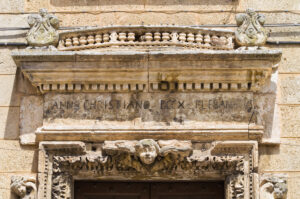
Wandering through these towns without knowing what to look for risks missing a lot. The historic centers are often compact, made up of narrow streets built of Lecce stone, baroque churches, and noble palaces that are indistinguishable from those in the rest of Salento. The difference lies in the details: a bilingual sign, an inscription on a building, a street name that retains its Griko form, a fountain with an inscription in Greek characters.
The best way to understand Grecia Salentina is to stop and visit the municipal libraries, local museums, and cultural associations. Talk to the people. If you get the chance, listen to someone who still uses Griko in conversation. These towns aren’t designed for mass tourism, and that’s their strength: they offer an authentic connection to a way of life you won’t find anywhere else in Italy.
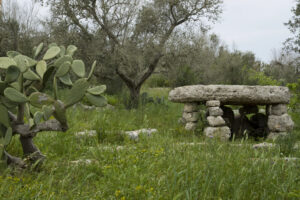
The cuisine of this area is typical of the Salento region, with a few local variations: piazzole di pane, pittule, and dishes made with legumes and wild vegetables. The agricultural tradition is still evident in the landscape, with centuries-old olive trees covering the plain as far as the eye can see. Not far away are places like Otranto, which tells another chapter in the history of encounters and exchanges between the Greco-Eastern world and Salento.
Visiting Grecia Salentina with even a basic understanding of its culture means taking home something you won’t easily forget: the realization that Europe isn’t made up solely of national borders, but of deep layers of cultures, languages, and traditions that have coexisted in the same territory for centuries. A living history lesson that no textbook can convey as effectively.
The farmsteads scattered throughout the region—some of the most fascinating places for understanding how people lived and worked in this land—are part of this landscape. Those who want to understand the Salento region at its deepest can find insights in what we write about the relationship between rural tradition and learning.
Take home an open-ended question
Grecia Salentina poses an uncomfortable yet necessary question to those who travel through it: what happens when a language ceases to be spoken every day? It doesn’t disappear all at once. It slowly fades away, shifting from conversation to song, from song to memory, from memory to books. And then the journey back can begin again, if someone decides it’s worth it. This region is one of the few places in Europe where that reverse trend is still underway.
If you’re exploring Salento with a group, planning an educational experience in this area, or are simply curious about how we work with the local community, contact us: tell us what you’re looking for, and let’s see together what we can create.
Frequently Asked Questions
Can Griko still be learned today?
Yes, there are courses organized by local cultural associations and, in some cases, educational activities in schools throughout the municipalities of Grecia Salentina. It’s not a standardized curriculum like that of a modern language, but anyone interested in learning Griko can find materials, recorded spoken texts, and opportunities to practice by participating in the cultural life of these towns.
Is Grecia Salentina an official administrative entity?
It is a culturally recognized territory that is mentioned in Italian legislation on the protection of historical linguistic minorities, but it is not an autonomous administrative entity. The municipalities that make up the region belong to the province of Lecce and each has its own municipal administration.
Do you need a local guide to visit these towns?
It’s not essential, but it makes a big difference to the experience. The historic centers are easy to explore on your own, but the stories behind the inscriptions, museums, and oral traditions come to life much better with a local. Some local organizations offer themed guided tours that are worth looking into before you go.
Are these places suitable for a school group or an educational project?
Yes, and in a very special way. Grecia Salentina offers insights into minority languages, cultural identity, European history, and cultural coexistence—themes central to many educational programs. Those who plan activities with groups of young people will find content in this area that is difficult to replicate elsewhere in Italy.
How much time do you need to visit the Grecia Salentina area?
For a quick tour, a few hours spent in a couple of towns will suffice. To truly get to know the area, at least two or three days will allow you to explore the towns, attend a few cultural events, and have time for the conversations that make all the difference. The area is compact, and the towns are easily accessible by car.
Does Griko have a written form?
Historically, Griko was primarily an oral language, passed down through songs and stories. Throughout the 20th century—and more intensively in recent decades—transcription methods and writing systems have been developed to put texts and poems into written form. Today, there are publications, dictionaries, and educational materials that document the language in its written form.