


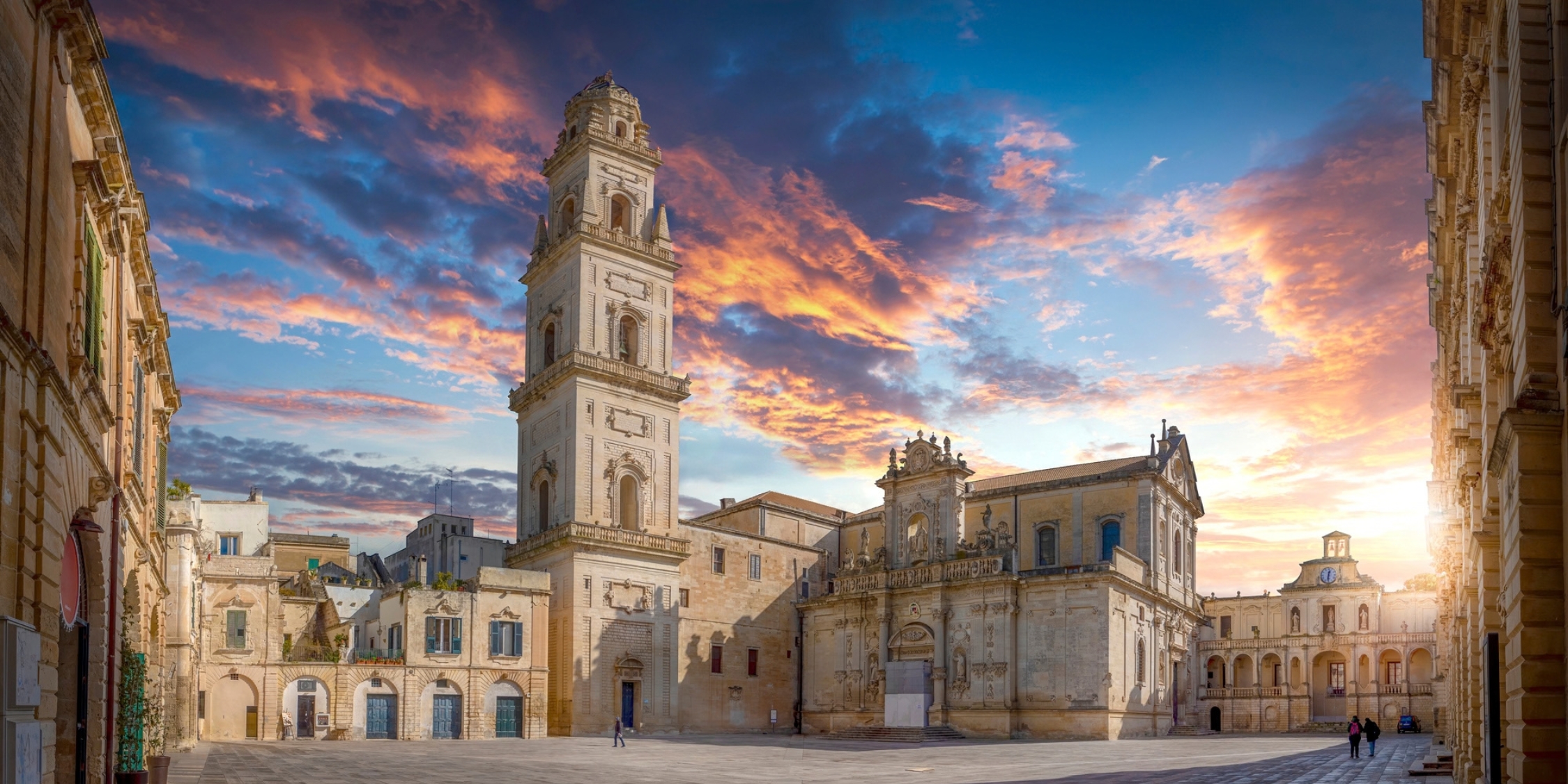
A Tour of Lecce’s Baroque Architecture
An educational field trip to Lecce’s historic center: experiencing Baroque art firsthand, among facades, courtyards, and churches built of Lecce stone.
The city that is an open-air museum
Lecce is one of the capitals of European Baroque, and its golden stone makes it a unique place to explore art on foot. The Lecce Baroque is not just a style: it is the result of the combination of a soft limestone—easy to carve—and generations of master stonemasons who have transformed it into facades, rose windows, balconies, and fantastical figures that seem to go on forever.
On this tour, we guide young people through the historic center: from the carved facades of churches to the hidden courtyards of palaces, all the way to the traces of the eras the city has preserved, from Roman times to the present. Piazza Sant’Oronzo, with its Roman amphitheater nestled among the buildings, tells a story of two thousand years of layered history all on its own: it is one of the places where students gain a deeper understanding of what it truly means to “read” a city.
A tour designed by teachers
This isn’t just a lesson taken to the streets: it’s a program designed by educators who know how to keep a group engaged. Each stop becomes an opportunity to observe, ask questions, and connect what we’re studying with what’s right in front of us: art history, but also the history, religion, and economy of a city that for centuries has been a crossroads of the Mediterranean.
Along the way, we also encounter the artisanal side of Lecce: the papier-mâché workshops, a tradition that for centuries has transformed humble materials into statues and sacred figures, and that allows the students to see how knowledge is passed down from one generation to the next.
The tour is tailored to the age and interests of the group—from middle school students to college and international groups—and for foreign groups, it is also conducted in English. It’s paced just right, with breaks and time to explore: because a city like Lecce isn’t just something to be explained—it’s something to be experienced.
The stages of the journey
- Piazza del Duomo and the bell tower
- The Basilica of Santa Croce
- Piazza Sant'Oronzo and the Roman Amphitheater
- The Courtyards of Historic Buildings
- The papier-mâché workshops
- Lecce stone: understanding the material